
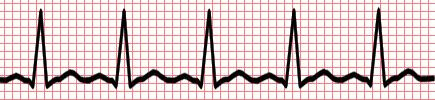
Sinus Tachycardia
As its name implies, sinus tachycardia is a condition in which the sinus node fires at a fast rate. Sinus tachycardia is normal if a person is exercising (mainly because of the effects of adrenaline), and sinus tachycardia can even occur in the setting of anxiety. When sinus tachycardia occurs under other circumstanses, it may be due to some underlying condition such as anemia, fever, an overactive thyroid gland, or as a side effect of certain medications. Sinus tachycardia can cause symptoms of rapid palpitations, lightheadedness, or fatigue. However, it may not cause any symptoms.
Your physician will usually try to find some underlying cause for sinus tachycardia. Generally, treatment is aimed at the underlying cause, but occasionally no cause is found. In these cases, a diagnosis of "Inappropriate Sinus Tachycardia" (a disorder of impulse generation) may be present. In symptomatic patients, medications are available to slow the sinus node and relieve symptoms. If sinus tachycardia is due to another condition, the arrhythmia should resolve after that condition is treated.
Over the last 20 years, a condition known as "Postural Tachycardia Syndrome" or POTS has been described. This is a disturbance of the Autonomic Nervous System, which normally controls the heart rate and blood pressure. POTS mostly affects young women, but it can occur in men also. It causes symptoms of palpitations, fatigue, lightheadedness, exercise intolerance, and others, but most of the symptoms only occur when standing up. There is a thorough discussion of POTS in the section on Dysautonomia on this website.